
You can Google almost anything. Trust is harder.
You can research a restaurant on the other side of the world in five minutes.
Choosing who will operate on you is a little different.
Search for cosmetic surgery in Turkey and you’ll find an extraordinary amount of information. Five-star reviews. Thousands of followers. Beautiful clinics. Dramatic transformations. Before-and-after galleries that seem to answer every question before you’ve even asked it.
The problem is that the internet is very good at showing you what someone wants you to see.
Reviews and engagement can be purchased or manipulated. Before-and-after photographs can be edited, selectively chosen, shot under different lighting or presented without the context that would help you understand the result.
That doesn’t mean everything you see online is false.
It means online popularity and medical quality are not the same thing.
And when you’re sitting in New York, Los Angeles, Miami or Dallas trying to decide who you can trust thousands of miles away, that distinction suddenly becomes very important. So perhaps the question isn’t simply:
“Is surgery in Turkey safe?”
Perhaps it’s:
“How do I know who I can trust when I’m not there to see it for myself?”
That’s a much better place to start.
So, is cosmetic surgery in Turkey safe?
Turkey has highly skilled medical professionals and modern medical facilities, but the standard of care is not identical across every surgeon, hospital or clinic. Cosmetic surgery also carries risks wherever it is performed. For Americans considering surgery in Turkey, the important factors include the medical professional, facility, assessment process, anesthesia, infection-control standards, recovery planning and continuity of care after returning home.
That’s not marketing language. It’s broadly consistent with the way US health authorities advise Americans to think about medical tourism.
The CDC recommends considering the destination, facility and treating healthcare professional, rather than assessing medical tourism purely by country. It also advises patients to investigate professional qualifications, facility credentials and follow-up arrangements before traveling.
The US State Department’s current Türkiye guidance makes a similarly important distinction: Türkiye has modern facilities and skilled medical professionals, but quality varies, so Americans considering elective surgery should make sure appropriate emergency facilities are available and that the professionals involved are appropriately qualified.
In other words:
Turkey isn’t one surgeon.
Turkey isn’t one clinic.
Turkey isn’t one hospital.
Judge the medical environment you’re actually entering.
Your surgeon matters. But they’re only part of the decision.
Naturally, when people start researching cosmetic surgery overseas, they focus on the surgeon.
“Who will perform my facelift?”
“Who will do my breast augmentation?”
“Whose results do I like?”
Those are important questions.
But surgery involves considerably more than the person holding the instruments.
There is anesthesia. Nursing. Sterile technique. Equipment. Recovery. Medical records. Infection control. The products and devices being used. And, critically, what happens if something doesn’t go according to plan.
So when you’re researching surgery overseas, don’t just ask:
“Who is my surgeon?”
Ask:
“Where will my surgery take place, and what happens if something doesn’t go to plan?”
That question tells you far more.
Why Asthetica prefers hospitals
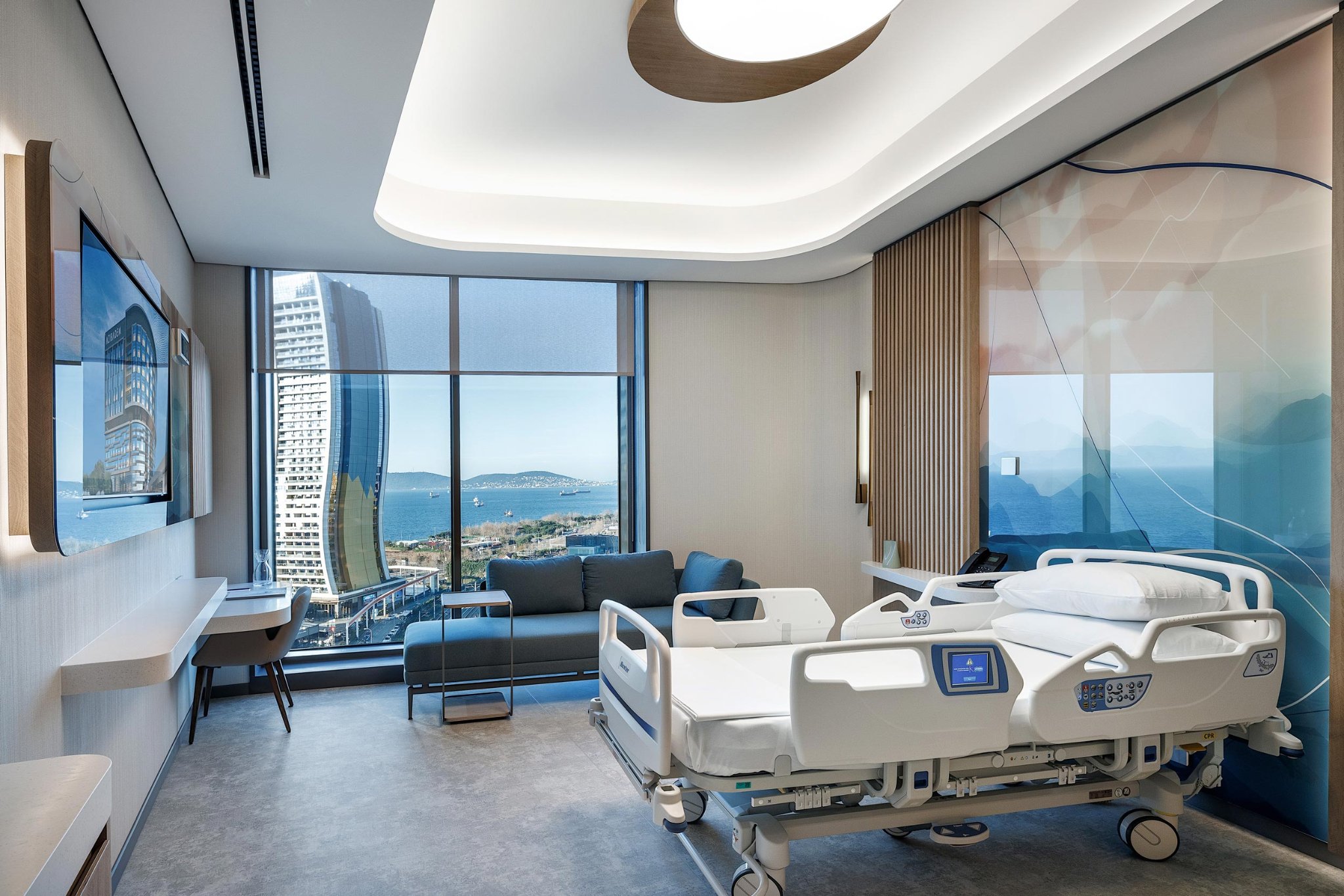
There is something reassuring about a beautiful clinic.
The polished reception. The marble. The Instagram-ready consultation room.
But none of those things tell you very much about the institution behind your care.
For Asthetica, that matters.
We deliberately favor established hospital environments for surgical procedures because we want more than a great-looking operating room. We want the broader medical infrastructure, oversight, escalation pathways and institutional accountability that come with an established hospital environment.
There is another, less glamorous word that matters here too:
Permanence.
When you travel overseas for surgery, you’re not only thinking about tomorrow.
Some of the decisions being made today may still matter ten, fifteen or twenty years from now.
Take breast implants.
The implant itself isn’t simply “a breast implant.” It has a manufacturer, model and identifying information. Turkey’s medical-device rules require implantable devices to be accompanied by identifying information including manufacturer details, serial or lot information, UDI and model information, and this information is intended to be provided to the patient.
That sort of traceability matters.
Because years from now, if an implant needs to be assessed, removed or replaced, you want to know what was actually used.
And this illustrates something bigger.
When Asthetica considers a surgical partner, we’re not simply asking:
“Can they perform this procedure well today?”
We’re asking:
“Is this an environment we’re comfortable putting our name behind?”
“Is there institutional history?”
“Are there systems and records?”
“Is there accountability beyond one individual or one social-media account?”
“What happens when questions arise later?”
“How does the wider organization operate?”
Those questions are harder to capture in a before-and-after gallery.
They’re also much harder for someone sitting in Chicago, Miami, Sydney or Toronto to investigate from a laptop.
And that is precisely the gap Asthetica was created to bridge.
Because the internet has made choosing easier. And harder.
There have never been more options.
There has also never been more noise.
A business can look enormous online while being relatively small in the real world.
Reviews can be manipulated.
Followers and engagement can be purchased.
Before-and-after photographs can be edited, selectively presented or photographed under completely different conditions.
None of that means you should ignore the internet.
It means you shouldn’t allow the internet to do all of your due diligence for you.
Asthetica spends extended periods on the ground in Turkey, maintaining relationships with our existing partners and assessing potential new ones.
We see more than the marketing.
We spend time understanding the people, the hospitals, the processes and the experience our clients are actually likely to encounter. Partner selection is ongoing because a relationship has to continue earning our confidence.
That’s a very different proposition from scrolling until you find the most convincing transformation photograph.
Don’t let Instagram choose your surgeon.
Social media is brilliant for inspiration.
It’s less effective as a due-diligence department.
A huge following doesn’t tell you how a provider handles complications.
A five-star review doesn’t show you the medical team behind the surgeon.
And a dramatic before-and-after doesn’t tell you what happened between those two photographs.
The CDC itself notes that social media is commonly used by medical tourists to find healthcare professionals and facilities. At the same time, its guidance warns that medical-tourism websites may not provide comprehensive information about facility accreditation, certification or professional qualifications.
So use social media.
Look at results.
Read reviews.
Ask questions.
Just don’t confuse marketing evidence with medical verification.
Before-and-after are useful. They aren’t a promise.
Everyone loves a transformation.
That’s understandable. You’re considering an aesthetic procedure because you want to understand what might be possible.
But before-and-after images need context.
Lighting changes.
Angles change.
Posing changes.
Timing changes.
Images can be edited.
And most importantly, someone else’s outcome isn’t a guarantee of yours.
Your anatomy, medical history, goals, healing and treatment plan are individual.
That’s why Asthetica’s process starts with assessment rather than simply matching a client to a photograph they liked online.
Assessment should come before certainty.
Imagine contacting a provider thousands of miles away and receiving an immediate:
“Yes. You’re perfect for this procedure.”
No proper assessment. No meaningful medical history. No careful consideration of your circumstances.
Would that make you feel reassured?
Or would it make you wonder how they could possibly know?
For Asthetica, assessment comes first.
Where suitability or treatment planning depends on your medical history, photographs, goals, anatomy or proposed combination of procedures, the appropriate medical team needs to assess those factors before a tailored plan can be represented as final.
Sometimes the most reassuring answer isn’t an instant yes.
It’s:
“We need to properly assess you first.”

And then there’s the flight home.
This is one of the biggest differences between surgery at home and medical tourism.
When treatment is finished, you still have an international journey ahead of you.
The CDC notes that surgery and prolonged air travel can independently increase blood-clot risk, and that traveling after surgery can add further risk. It also recommends that patients understand their follow-up arrangements and obtain appropriate medical records for subsequent care at home.
Exactly when someone is medically fit to fly depends on the procedure and their individual circumstances, so this isn’t something to decide from a generic TikTok recovery timeline.
It belongs in the treatment and recovery plan.
You’re traveling for surgery. You’re not booking a normal vacation.
Istanbul is spectacular.
There’s the Bosphorus. Rooftop restaurants. The Grand Bazaar. Palaces, mosques, incredible food and thousands of years of history.
You may absolutely want to experience more of Turkey while you’re there.
But surgery changes the itinerary.
The CDC warns that typical vacation activities such as alcohol, strenuous exercise, sunbathing, swimming and long tours can interfere with postoperative recovery.
Asthetica can help clients extend their stay and arrange alternative or upgraded accommodation when appropriate, allowing them to enjoy more of Turkey around their treatment journey.
But recovery comes first.
What you can safely do, and when, should depend on the treating medical team’s advice.
What happens when you land in America?
This question deserves more attention than it gets.
The procedure might happen in Istanbul.
Recovery continues when you get home.
The CDC recommends planning for follow-up care before traveling and understanding what your US health insurance may or may not cover if additional treatment is needed after returning home. It also recommends obtaining overseas medical records for continuity of care.
So before booking, ask:
-
Who do I contact after I get home?
-
What happens if I’m worried about something?
-
How are my medical records handled?
-
What follow-up has been planned?
The plane landing shouldn’t be the end of the conversation.
So how do you verify all of this from thousands of miles away?
That’s the difficult part.
And ultimately, it’s one of the reasons Asthetica exists.
What started as an Australian-owned medical tourism facilitation and concierge company founded from first-hand experience with surgery in Turkey, has grown into a multi award winning global company with a presence in North America and around the globe.
We don’t select partners because their Instagram looks impressive.
Asthetica spends extended periods on the ground in Turkey working with existing partners, understanding how those relationships perform over time and assessing potential new ones before they’re considered for Asthetica clients.
We look beyond the shop window.
Because if you’re traveling halfway around the world for treatment, you shouldn’t have to become an expert in an unfamiliar healthcare market before you can make an informed decision.
The white-glove approach to medical tourism
Asthetica brings the different parts of the journey together.
Depending on the individual treatment plan and proposal, that can include medical assessment, treatment planning, hospital care, five-star accommodation, VIP transfers, translator support and support before, during and after the trip.
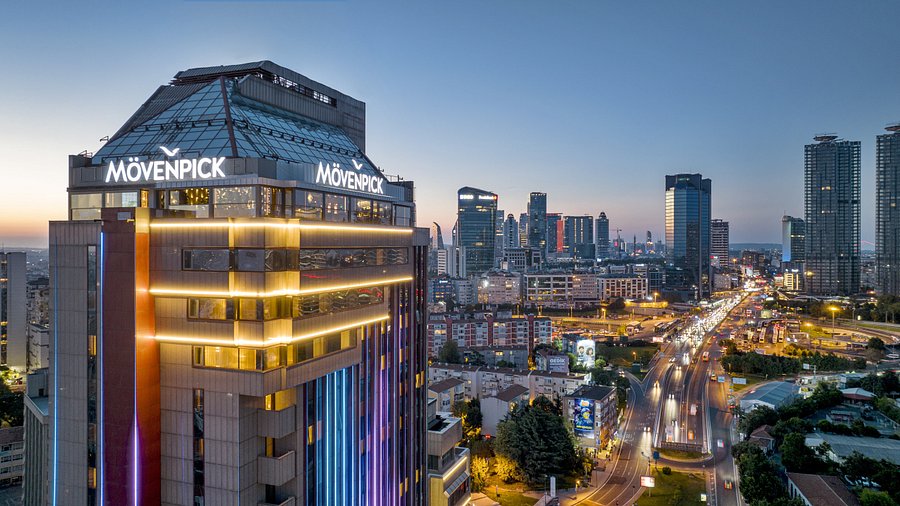
In Istanbul, our current hotel partners include Mövenpick Hotel Istanbul Bosphorus and Sheraton Istanbul City Center, with alternative and upgraded accommodation potentially available for clients extending their stay.
Why five-star accommodation?
Because recovering from treatment in an unfamiliar city isn’t the same as choosing somewhere to sleep on a normal vacation.
Comfort matters.
Service matters.
Location matters.
Having the details thought through matters.
This is medical tourism, but it is also an important personal journey.
We want the experience around the treatment to feel considered from beginning to end.
We don’t like surprises. Neither should you.
No responsible company can promise that surgery will be completely risk-free.
We won’t promise you a particular outcome.
We won’t tell you that every person is suitable for every procedure.
And we won’t pretend that traveling overseas for surgery doesn’t require careful consideration.
What we can do is reduce unnecessary uncertainty.
That means appropriate assessment.
Carefully selected partners.
Hospital-based environments for surgery.
Clearer expectations.
Coordinated logistics.
And people who understand the journey standing beside you throughout it.
Asthetica is a multi-award-winning medical tourism company and has been recognized as “Best Global Medical Tourism Provider to Turkey” for multiple years in a row, reflecting the relationship-led approach we’ve built over time.
For us, it comes back to a very simple philosophy:
Do it once. Do it right.
10 questions to ask before booking surgery in Turkey
Save these. Ask them whether you’re considering Asthetica or anyone else.
1. Who medically assesses me before my treatment plan is confirmed?
2. Who will perform my surgery, and what are their qualifications?
3. Where will the operation actually take place?
4. What medical infrastructure is available if something unexpected happens?
5. Who provides my anesthesia and perioperative care?
6. What exactly is included in the quoted package?
7. How is my recovery period determined?
8. When will the medical team decide I’m fit to fly?
9. What aftercare and communication are available once I’m home?
10. Who do I contact if I have a concern or possible complication?
Those questions won’t eliminate the risks inherent in surgery. They will help you make a considerably more informed decision.
FAQs
Is plastic surgery cheaper in Turkey than in the USA?
Cost is one reason Americans consider medical tourism, and CDC guidance identifies lower treatment costs as one motivation for seeking healthcare abroad. But the advertised procedure price is only one part of the comparison.
Facility standards, professional qualifications, medical assessment, accommodation, transfers, follow-up care and the potential cost of complications should all be considered.
This is where Asthetica takes a different approach. We are not built around finding the cheapest advertised procedure. We focus on the wider treatment experience, the provider environment, the assessment process and the support surrounding your care, so you can compare value rather than price alone.
Are Turkish hospitals good?
Türkiye has modern medical facilities and skilled professionals, but quality varies between providers and facilities. The US State Department recommends that Americans considering surgery in Türkiye verify professional qualifications and the availability of appropriate emergency medical facilities.
For Asthetica, the question is not simply whether Turkey has good hospitals. It is which hospitals meet the standards we are prepared to put our name behind.
For surgical procedures, Asthetica currently works with selected accredited hospital partners because we place importance on medical infrastructure, institutional oversight, escalation pathways, documentation and long-term accountability. Our job is to do much of that groundwork before you ever board a flight.
Is it safe to fly after cosmetic surgery?
Flying after surgery can involve additional risks, including blood clots. The appropriate timing depends on the procedure and your individual circumstances and should be determined with the treating medical team rather than assumed from a generic timeline.
That is why Asthetica does not treat surgery and travel as two separate decisions. Your treatment plan, recommended stay, accommodation and travel arrangements are coordinated around the medical guidance provided for your individual case.
Should I choose my surgeon from Instagram?
Social media can be useful for discovery, but it should not be your only source of due diligence.
A strong Instagram following, impressive before-and-after photographs or glowing reviews can tell you something about a provider, but they do not tell you everything. Professional qualifications, the facility, medical assessment, treatment planning, follow-up arrangements and the wider medical environment matter too.
Asthetica spends significant time on the ground in Turkey working with existing partners and assessing potential new ones. We look beyond the profile, the follower count and the shop window, because when you are travelling thousands of miles for surgery, the questions behind the images matter just as much as the images themselves.
Does Asthetica perform the surgery?
No. Asthetica is a medical tourism facilitation and concierge company, not the treating medical provider. Treatment is provided by independent medical professionals.
Our role is to help bring the wider process together. That includes coordinating medical assessment, treatment planning, accommodation, transfers and support before, during and after your trip.
Instead of leaving you to research hospitals, surgeons, hotels, transfers and treatment logistics separately, Asthetica helps create one coordinated route through the process.
Does Asthetica use clinics or hospitals?
For surgical procedures, Asthetica currently favors approved hospital partners.
That choice is deliberate. Established hospital environments can offer broader medical resources, institutional oversight, clearer escalation pathways, stronger documentation and greater long-term accountability.
We do not believe every clinic is unsafe, nor do we believe the word “hospital” alone guarantees quality. What matters is the infrastructure, governance, accountability and medical environment behind the treatment.
For Asthetica, those factors form part of the decision before a provider becomes part of our network.
Can I turn my treatment trip into a vacation?
Potentially, yes. Asthetica can facilitate extended stays and alternative or upgraded accommodation, allowing clients to experience more of Turkey where appropriate.
But recovery comes first.
Activities such as swimming, sun exposure, alcohol, strenuous exercise and extensive sightseeing may not be appropriate during recovery, so your treating medical team’s guidance should always take priority.
Asthetica can help coordinate the wider trip around your treatment rather than expecting you to work everything out yourself.
So, where do you start?
You start with the right questions.
Who is treating me?
Where will my surgery take place?
What medical infrastructure surrounds that procedure?
What happens if something does not go to plan?
How will my treatment, accommodation, transfers and recovery be coordinated?
And who is there to help me make sense of it all before I commit?
Those are the questions Asthetica was built to help answer.
Medical tourism should not mean trying to piece together an unfamiliar healthcare system from search results, social media profiles and price lists on the other side of the world.
Asthetica does the groundwork, coordinates the process and connects you with selected medical providers through a structured, supported treatment experience.
Because choosing surgery overseas is not simply about finding a surgeon.
It is about understanding everything that surrounds them.
Contact Us
Start your assessment with Asthetica.